Make help easier to find than dumping
A cat left by the road loses more than a home. It loses its whole story.
A person who finds that cat has no way to know if it was sterilised, if it was fed somewhere, if anyone already cares for it, or if it is lost or abandoned. At the roadside, a lost cat and a dumped cat look exactly the same. A scared cat, no name, no history, no one who knows it.
It isn’t only finders. Someone who has to give up their own cat, because of a move, money or a death in the family, usually has the whole story in their head and nowhere to put it. I’d like that story to travel with the cat.
Why prosecution alone is a weak answer
Proving dumping is hard. You would need to know who did it, when, and why. Most people who find a cat do not have that proof. By the time anyone could prove anything, the cat has already been left behind.
That does not mean dumping should be ignored. It means a system built only around proving it after the fact starts too late for the cat.
A better question
Why was dumping the easiest option that person could find?
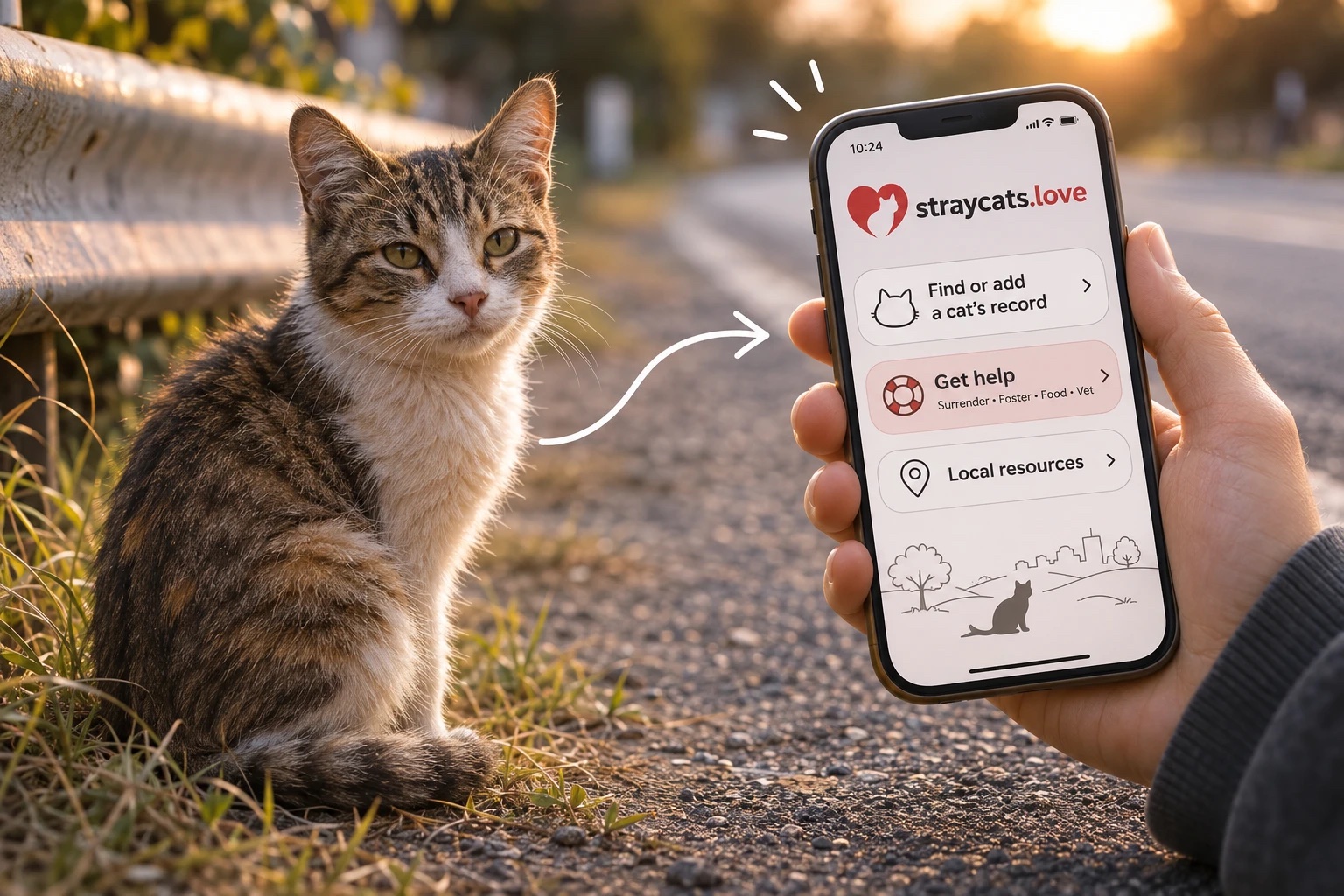
What if getting help was just as easy as finding a public toilet? You open your phone, and in seconds you find a safe place to take the cat, a foster home, food help, or a low cost vet to fix the cat so it cannot have kittens. You do not need to know which organisation to call first.
Groups like the SPCA have done great work. But the system feels stuck in one way. Help is out there, but it is hard to find when you need it fast. That is where there is room for something simpler and more open.
What StrayCats could add
For context, I am working on an idea called StrayCats. There is no app. But the plans are being worked out in the open, and anyone can read them and comment on them. It is open source and non profit.
The idea is simple. Each cat gets its own record. The record belongs to the cat, not to one person. If you meet a cat, you can see what people already know about it. If you need help, you can find local help in the same place.
That would not prove who dumped a cat. It could do something smaller and more useful. It could stop the second harm, which is the cat becoming completely unknown the moment it is left behind.
The hard problems come first
There are a lot of hard problems to solve first. Bad people could use a system like this in bad ways. They could try to find cats to hurt them. They could try to find the people who care for them, or lie about a cat.
So we have to protect both the cats and the people. That means no exact spots, ever. No home addresses. People can use just a nickname at first. And we have to think hard about who can see what, before we build anything.
That is why StrayCats is deliberately not building an app yet. The safety problems have to come first, not after.
What this would not do
This would not stop every case of dumping. It would not fix funding or vet access on its own. It should never be used to shame people or show where a cat lives.
The goal is narrower. If help is easier to find than dumping, fewer cats will end up by the road. And if a cat does end up there, the next person who meets it will not have to start from zero.
Open questions for collaborators
- What is the simplest front door to help in a crisis, for a person who has never contacted a rescue before?
- How do you connect a person in crisis to local surrender, foster, food, or vet help in seconds, without publishing where any cat lives?
- How do you keep a cat’s record useful when the person who made it leaves, while keeping both cats and caretakers safe from malicious actors?
- What should a finder be able to learn about a cat, and what must stay private?
Feedback is welcome through the channels already on the StrayCats site: a 30 minute “Let’s talk” chat, email, and GitHub Discussions or Issues. This page is not a promise of a product. It is an open question, and it needs collaborators, not just readers.